
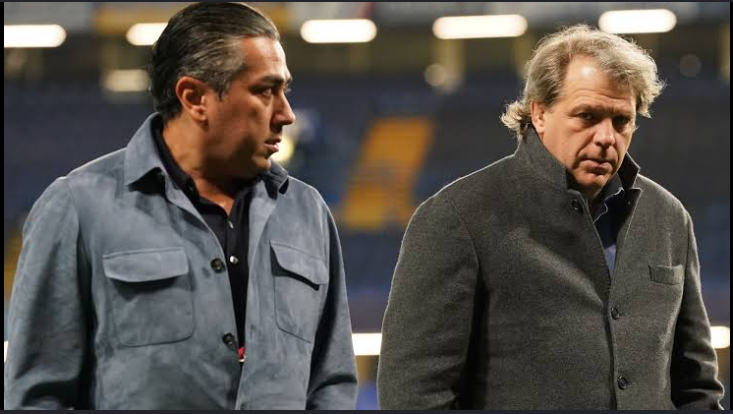
Todd Boehly is not a traditional sports owner. He didn’t inherit a fortune or make his money solely from one industry. The 52-year-old co-founded Eldridge Industries in 2015 after a successful career building the credit business at Guggenheim Partners . His background is in finance and deal-making, which informs his entire investment philosophy.
At its core, Eldridge is a holding company that owns stakes in over 100 businesses across finance, insurance, technology, real estate, sports, and media . Unlike a typical private equity firm that buys, fixes, and sells assets, Boehly and his partners—like Eldridge co-founder Tony Minella—prefer to acquire assets they believe are undervalued and hold them for the long term . This “buy and build” strategy creates a powerful ecosystem where one asset can benefit another.
The Boehly Portfolio: A Look Inside the Empire
To understand Boehly’s genius (and his critics), you have to look at the sheer scale and diversity of what he owns. It’s a collection of some of the most powerful global brands.
Sports
-
Chelsea FC (Chairman & Co-owner): Acquired in a record deal in 2022, this is Boehly’s most high-profile and controversial asset .
-
Los Angeles Dodgers (Owner): Purchased for $2.15 billion in 2012, this was the start of his sports empire and a masterclass in media rights value .
-
Los Angeles Lakers (Minority Stakeholder): A personal stake in one of the NBA’s most valuable franchises .
-
Los Angeles Sparks (Owner): WNBA team demonstrating his stake in women’s sports .
Media & Entertainment
-
Penske Media: Eldridge holds a significant stake in this media giant, which owns Variety, Billboard, Rolling Stone, The Hollywood Reporter, and Dick Clark Productions (the company behind the Golden Globes) .
-
A24: An investment in the indie studio behind Oscar-winning films like Everything Everywhere All At Once .
-
Music Catalogs: Eldridge owns the rights to Bruce Springsteen’s master recordings and songwriting catalog .
Finance & Insurance
-
Security Benefit: A key insurance company that provides the “dry powder” to fund many of Eldridge’s deals. Boehly acquired it while at Guggenheim and brought it with him to Eldridge .
The Strategy: Why Sports is the Ultimate Asset
So, why sports? Boehly offers a clear, three-pronged answer:
-
Finite Supply: As Boehly noted in an interview, there is a “finite number of sports teams.” When they come up for sale, it’s a rare opportunity .
-
Passionate Fandom: “Fans are the lifeblood of any team,” he says. Investing in sports is, at its core, investing in fandom and intellectual property (IP) . Unlike movies or music, live sports create an unbreakable weekly habit that people “will time shift their calendar for” .
-
Undervalued Media Rights: The Dodgers deal is the perfect case study. When he and his partners bought the team for $2.15 billion, they immediately signed a 25-year television deal with Time Warner Cable worth $8.35 billion . They realized the team’s value as a content engine was underpriced. The Dodgers are now on track to be the first MLB team to generate over $1 billion in annual revenue .
Successes: The Dodgers and Beyond
Boehly’s method works when the strategy is clear. The Dodgers are a juggernaut, consistently winning and drawing massive audiences. The formula is simple: build a winning team, attract huge viewership, and sign massive media deals. As he put it, “If you build a winning team, success follows naturally” .
His approach to media is similarly sharp. By acquiring iconic titles like Rolling Stone and the Golden Globes, he owns a stake in the cultural conversation itself.
Challenges: The Chelsea Conundrum
However, his “buy and build” philosophy hits its limits with sports like soccer. Chelsea is a perfect example of a “misunderstood” strategy .
-
The Issue: Boehly and his consortium spent heavily on young talent, offering them long-term contracts (sometimes eight years) to amortize the cost and circumvent financial fair play rules.
-
The Result: The on-field results didn’t match the investment, leading to public criticism. Boehly’s response is that progress isn’t “linear” and they are planning for the long term .
This is the most interesting tension in his empire. In business and baseball, patience and heavy investment yield predictable returns. In the chaotic world of European football, there are no guarantees. Furthermore, his diversification is not without risk; the Golden Globes acquisition has been a mixed bag regarding audience reception .
Future Trends: The $72 Billion Question
Looking to 2026 and beyond, Boehly is in a phase of evolution and expansion .
-
Global Focus: After trips to Japan, Korea, and Hong Kong, Boehly is looking to Asia for expansion, calling it a “giant market” . This aligns with the Dodgers’ global appeal and the increasing value of international media rights.
-
Expanding the Fandom: Boehly is exploring how to democratize sports investment. He’s looking at ways to bring sports to “mass market investors, whether through fractional ownership or buying into a fund” .
-
Embracing AI: Boehly’s Eldridge Industries is aggressively adopting AI, seeing it not just as a tool, but as an existential risk to software companies—a sector they have been largely divesting from. As Minella put it, “Without incorporating AI, you are going to get run over” .
-
The “Multi-Club” Model: There are strong rumors that Boehly is looking to expand his football portfolio. With changes potentially coming to the ownership rules in Argentina, he is reportedly eyeing iconic clubs like Boca Juniors to create a multi-club network, similar to what other global investors are doing .
Key Takeaways
-
From Finance to Fandom: Todd Boehly uses his finance background to treat sports teams as undervalued media properties.
-
Ecosystem Strategy: Eldridge creates value by linking sports, media, real estate, and finance. His ownership of the Dodgers and The Hollywood Reporter is not a coincidence.
-
Long-Term View: While the Chelsea FC project has faced public skepticism, Boehly’s track record suggests he is playing a long game, measuring success over years, not months.
-
The Future is Data and Global: He is betting heavily on AI, international expansion (especially in Asia), and new ways to engage fans to drive future growth.
Todd Boehly is more than just a Chelsea owner; he is a new kind of billionaire—one building an ecosystem of IP that captures attention, culture, and capital. Whether he can finally translate that success to the Stamford Bridge pitch remains the most fascinating chapter yet to be written.