
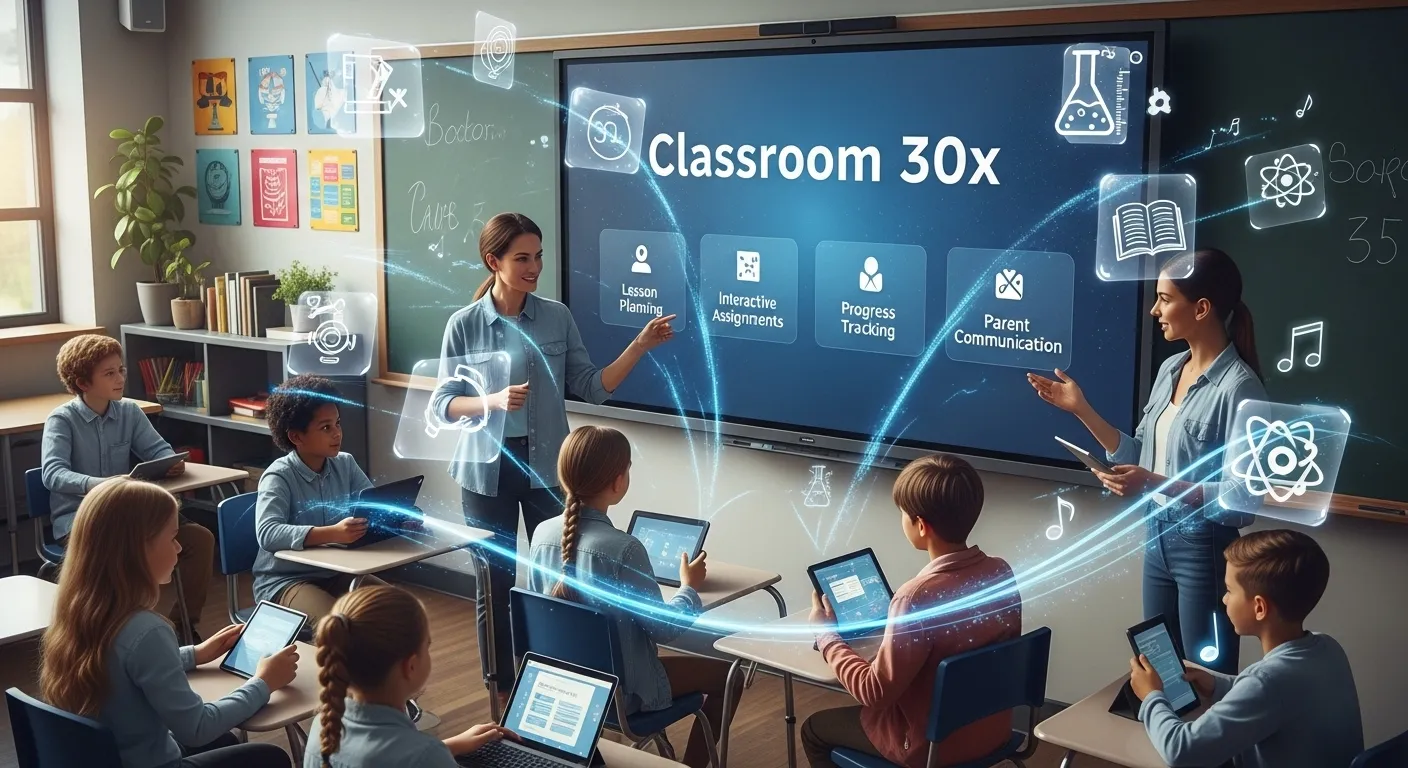
Classroom 30x is transforming how students learn by turning traditional lessons into engaging, game-based experiences. This free web platform helps K-12 students master math, science, language arts, and other subjects through interactive activities that feel more like playing than studying.
Teachers across the United States are using Classroom 30x to boost student participation and improve test scores. The platform works on any device with internet access, requires no downloads, and students can jump in within minutes. Schools report engagement increases up to 93% when incorporating these gamified learning tools into regular instruction.
Besides the digital platform, “Classroom 30x” also refers to university courses like MATH 30X (Calculus I) and ITAL 30X (Italian Film Studies) at certain colleges. These academic courses follow traditional semester structures with specific prerequisites and credit requirements.
This guide covers how Classroom 30x works, who benefits most, and practical tips for getting started.
Understanding the Classroom 30x Platform
Classroom 30x operates entirely through web browsers without requiring software installations or student email addresses. Teachers create virtual classrooms by selecting grade levels and subjects, then receive a simple join code students enter to access assignments.
The platform converts standard curriculum into quest-based challenges where students earn points, badges, and level up as they complete work. Math problems become puzzle adventures, science concepts turn into virtual lab experiments, and reading comprehension transforms into detective missions.
Smart adaptive technology adjusts difficulty in real time based on student performance. Kids struggling with concepts receive easier practice problems and helpful hints. Advanced learners get harder challenges automatically to prevent boredom. This personalization ensures every student works at an appropriate level.
Teachers access detailed analytics showing exactly which topics students master and where they need help. The dashboard displays individual progress, class averages, and time spent on activities. This data helps educators make informed decisions about lesson pacing and intervention strategies.
Quick Platform Overview
| Feature | Description |
| Cost | Completely free |
| Access | Web browser, any device |
| Setup Time | Under 5 minutes |
| Grade Range | Kindergarten through 12th grade |
| Subjects | Math, science, language arts, social studies, STEM |
| Key Benefit | Increases engagement through gamification |
How Teachers Are Using It Successfully
Educators integrate Classroom 30x in multiple ways depending on their teaching style and classroom needs. Some use it as a warm-up activity at the start of each class period, giving students 10-15 minutes of interactive practice while attendance is taken.
Others assign platform activities as homework replacement since students complete more work when it feels like gaming. Parents report kids voluntarily doing “assignments” on weekends because the format is enjoyable rather than tedious.
During class instruction, teachers project Classroom 30x challenges on smartboards for whole-group problem solving. Students collaborate, debate strategies, and learn from peers while working through content together. This approach builds communication skills alongside academic knowledge.
Special education teachers particularly value the adaptive features. Students with learning differences receive appropriate scaffolding without feeling singled out. The visual, interactive nature supports various learning styles better than traditional worksheets.
One Texas elementary school implemented Classroom 30x three days weekly and saw math proficiency scores jump 20% within one semester. Teachers noted students who previously avoided math started volunteering to solve problems and asking for extra practice.
Academic Courses Called Classroom 30x
Some universities use “30x” designations for specific courses. MATH 30X typically covers introductory calculus including limits, continuity, differentiation, and basic integration. This 3-unit course serves as the foundation for engineering, physics, and advanced mathematics programs.
Students need strong precalculus skills verified through placement exams or prerequisite courses like MATH 19 or MATH 18A/18B with minimum grades. The course uses graphical, algebraic, and numerical approaches to problem solving.
ITAL 30X introduces Italian cinema through works by directors like Fellini, Rossellini, de Sica, and Antonioni. This 5-unit course examines postwar European social and aesthetic themes through film analysis. Classes are taught in English with subtitled films.
These academic courses are completely separate from the K-12 learning platform but share similar naming conventions. Students should check their specific university catalogs for exact course descriptions and requirements.
Why Students Actually Enjoy Using It
Kids respond positively to Classroom 30x because the gaming elements tap into natural competitive instincts and desire for achievement. Seeing points accumulate and badges unlock provides immediate satisfaction that traditional homework lacks.
The instant feedback system tells students right away if answers are correct. Wrong answers trigger helpful hints rather than red marks, reducing anxiety around making mistakes. This creates a safe environment for trial and error learning.
Leaderboards showing top performers motivate many students, though teachers can disable this feature if it creates unhealthy pressure. Team challenges promote cooperation where students help classmates improve collective scores.
Visual and audio rewards celebrate success in ways that feel meaningful to digital-native kids. Unlocking new levels or earning rare badges creates the same dopamine response as video games while building academic skills.
Students also appreciate working at their own pace without feeling rushed or held back. Advanced kids can race ahead while struggling students get time to master concepts before moving forward.
Getting Started: Simple Steps for Schools
Schools wanting to try Classroom 30x should start small with pilot programs in one or two classrooms before full implementation. Choose enthusiastic teachers willing to experiment and provide feedback on what works.
Begin with a single subject like math where gamification shows quick results. Use the platform 2-3 times weekly for 15-20 minutes to build student familiarity without overwhelming schedules.
Train teachers on basic navigation and analytics features during a short professional development session. Most educators become comfortable with core functions within 30 minutes of hands-on practice.
Set clear academic goals tied to platform use so effectiveness can be measured. Track metrics like assignment completion rates, test scores, and student engagement levels before and after implementation.
Communicate with parents about the new tool, explaining how it supplements rather than replaces traditional instruction. Share student progress reports so families see the educational value beyond “just playing games.”
Gather regular feedback from students and teachers to refine how the platform fits into your school’s specific needs. What works perfectly in one classroom may need adjustment in another.
Common Questions Teachers Ask
Is special equipment required?
No, Classroom 30x works on existing computers, tablets, or smartphones with internet access. Standard school networks and devices are sufficient.
How much time does setup take?
Teachers can create a classroom and start the first activity in under 5 minutes. No extensive configuration or IT support is needed.
Can it replace textbooks?
The platform supplements traditional curriculum rather than replacing it. It works best alongside existing teaching materials and methods.
What if students don’t have home internet?
All activities can be completed during school hours. Teachers can make platform use optional for homework or provide school time for completion.
Does it align with state standards?
Yes, content covers common core standards and typical state curriculum requirements across subjects and grade levels.
How is student data protected?
The platform follows educational privacy regulations and doesn’t require personal student information beyond first names for teacher identification purposes.
Can parents see student progress?
Teachers can share progress reports with families, and some schools provide parent access codes to view the same information teachers see.
Making the Most of Analytics
The data dashboard shows which students master concepts quickly and who needs intervention. Teachers use this information to form flexible skill groups for targeted instruction.
Time-on-task metrics reveal if students are rushing through activities or getting stuck. Unusually fast completion might indicate guessing, while very slow progress suggests concepts are too challenging.
Class-wide performance data helps teachers identify topics needing reteaching. If 70% of students miss questions about fractions, that signals a gap in understanding requiring more classroom focus.
Progress tracking over weeks and months shows growth trends. Students see their own improvement through visual graphs, building confidence and motivation to continue working hard.
Teachers can pull reports before parent conferences showing concrete evidence of student effort and achievement. This data makes conversations more productive and specific.
Final Thoughts
Classroom 30x offers schools a proven way to increase student engagement and improve learning outcomes without budget strain. The free platform works with existing technology, requires minimal training, and delivers measurable results when used consistently.
Students benefit from personalized learning paths that adapt to their needs while the gaming format makes practice enjoyable. Teachers gain valuable insights through analytics that inform instruction and intervention decisions.
Whether your school needs better math scores, higher homework completion, or more engaged classrooms, Classroom 30x provides tools that address these challenges. The combination of solid educational content with motivating game mechanics creates learning experiences students remember and skills they actually master.